 Save
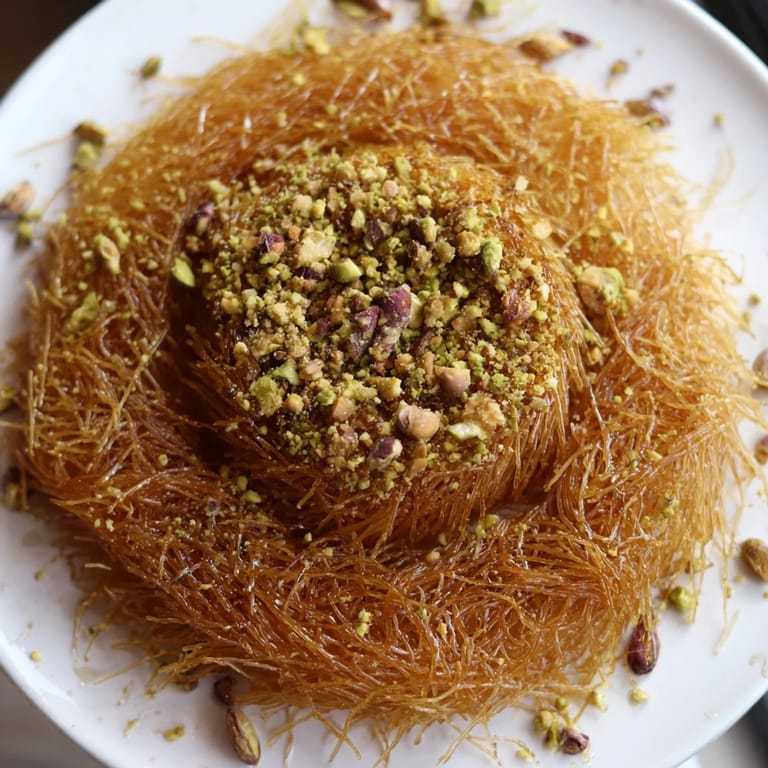
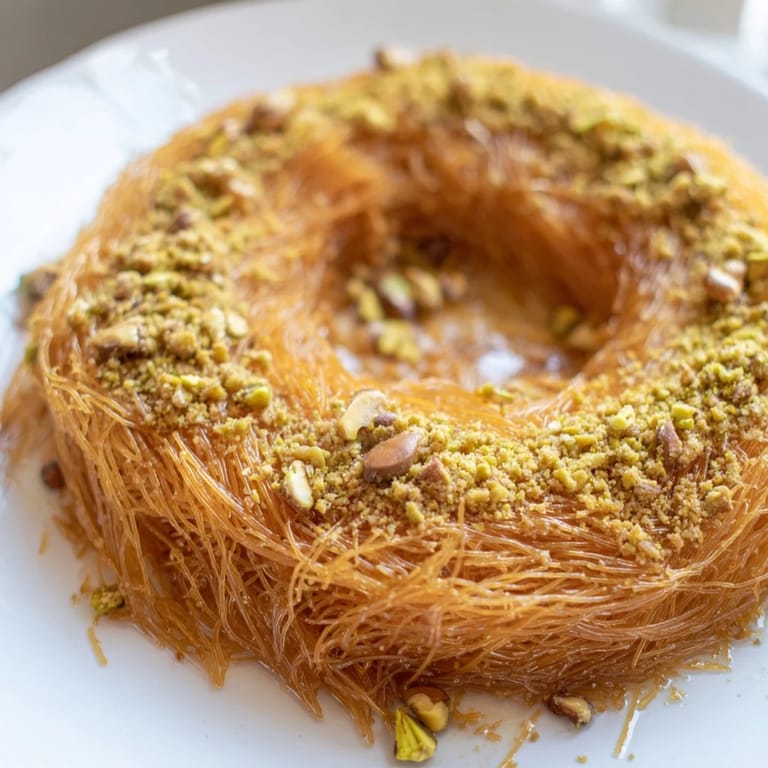
Save My aunt brought konafa to every family gathering, and I spent years watching her pull those delicate strands of kataifi apart like she was tuning a musical instrument. The first time I made it alone, I was terrified of shattering the pastry, but the moment that golden-brown masterpiece came out of the oven and I poured the warm honey syrup over it, the entire kitchen filled with this intoxicating sweetness that made everything worth it. Now whenever I make konafa, I think of her hands moving so confidently through each layer, and I realize she wasn't just making dessert—she was holding our family together, one crispy, honeyed bite at a time.
I remember making this for a potluck where everyone brought store-bought desserts, and I almost didn't bake it because it seemed like too much work. But something about the quiet focus of layering the nuts and brushing butter made me lose track of time in the best way. When I cut into those golden squares and drizzled syrup over them in my kitchen, the smell alone told me this was going to change how people thought about what I could make.
Ingredients
- Kataifi (shredded phyllo dough), 500 g, thawed: This is the soul of konafa—those impossibly fine strands create the texture that makes people ask 'how did you do that?' Make sure it's thawed slowly in the fridge, not rushed, or it becomes brittle and unforgiving.
- Unsalted butter, 200 g, melted: The butter is what turns the kataifi from delicate threads into crispy-edged gold; brush it generously but evenly so some parts don't brown while others stay pale.
- Walnuts, 150 g, finely chopped: Walnuts bring an earthy warmth that anchors all the spices; if you chop them by hand instead of using a processor, you'll get better texture and fewer dusty bits.
- Pistachios, 100 g, finely chopped: These add a subtle brightness and a hint of color that makes people lean in closer to look at your creation.
- Almonds, 50 g, finely chopped: Almonds soften the edges of the bolder flavors and add a delicate sweetness that balances the spices.
- Granulated sugar, 60 g: This sweetens the nut filling and helps it meld into a unified flavor rather than tasting like separate components.
- Ground cinnamon, 1 tsp: Cinnamon is the warm heartbeat of this dessert; don't skip it or use stale cinnamon that's lost its punch.
- Ground cardamom, 1/4 tsp: Cardamom whispers rather than shouts, adding complexity that makes people pause between bites and wonder what that mysterious note is.
- Granulated sugar, 200 g (for syrup): This creates the foundation of your syrup; the amount is exact because it needs to coat and sink into the pastry without making it soggy.
- Water, 120 ml: The syrup won't work without the right water-to-sugar ratio; it's the difference between a glossy glaze and a sticky mess.
- Honey, 2 tbsp: Honey adds complexity and prevents the syrup from crystallizing, plus it's the ingredient that smells like home.
- Lemon juice, 1 tsp: A squeeze of brightness that cuts through all the richness and keeps the dessert from feeling heavy.
- Rose water or orange blossom water, 1 tsp (optional): If you add this, your konafa will smell like a Middle Eastern spice market; if you skip it, the dessert is still beautiful but slightly less magical.
Tired of Takeout? 🥡
Get 10 meals you can make faster than delivery arrives. Seriously.
One email. No spam. Unsubscribe anytime.
Instructions
- Heat your oven and prep your pan:
- Preheat to 180°C (350°F) and grease a 23 cm round baking pan with a light brush of melted butter so the konafa won't stick.
- Wake up the kataifi:
- Take the thawed kataifi and gently separate the strands with your fingertips, almost like you're fluffing up hair. This takes patience but prevents clumps that won't cook evenly.
- Build the base layer:
- Press half the loosened kataifi evenly into the bottom of the pan, creating a cushion, then brush it generously with melted butter until every strand glistens.
- Mix your nut treasure:
- Combine the chopped walnuts, pistachios, almonds, sugar, cinnamon, and cardamom in a bowl and stir until the sugar is distributed and the aroma fills your kitchen.
- Spread the filling:
- Scatter the nut mixture in an even layer over the buttered kataifi base, pressing gently so it stays put during baking.
- Crown it with the top layer:
- Arrange the remaining kataifi over the nuts, pressing gently and carefully to avoid crushing the layers below, then brush the entire surface with the remaining melted butter until it's glossy and even.
- Bake until golden:
- Bake for 30–35 minutes, watching until the top turns a deep golden brown and feels crisp when you touch it lightly with a fork.
- Make your syrup while it bakes:
- In a saucepan, combine sugar and water, bring to a boil, then simmer gently for 7–8 minutes until slightly thickened. Stir in honey, lemon juice, and rose or orange blossom water if using, then remove from heat and let it cool for a few minutes.
- The crucial moment:
- The second the konafa comes out of the oven, while it's still steaming hot, pour the warm syrup evenly over the entire surface. The pastry will drink it in immediately, transforming from crisp to tender in the best way.
- Rest and slice:
- Let it cool for 30 minutes at room temperature so the layers set and the flavors marry. Cut into diamonds or squares with a sharp knife and serve while still warm or at room temperature.
 Pin it
 There's a moment right after you pour that warm syrup over the golden pastry when you hear a soft sizzle and the whole dessert seems to come alive. That's when I know I've made something special, something that will taste like care on every fork.
The Art of Layering
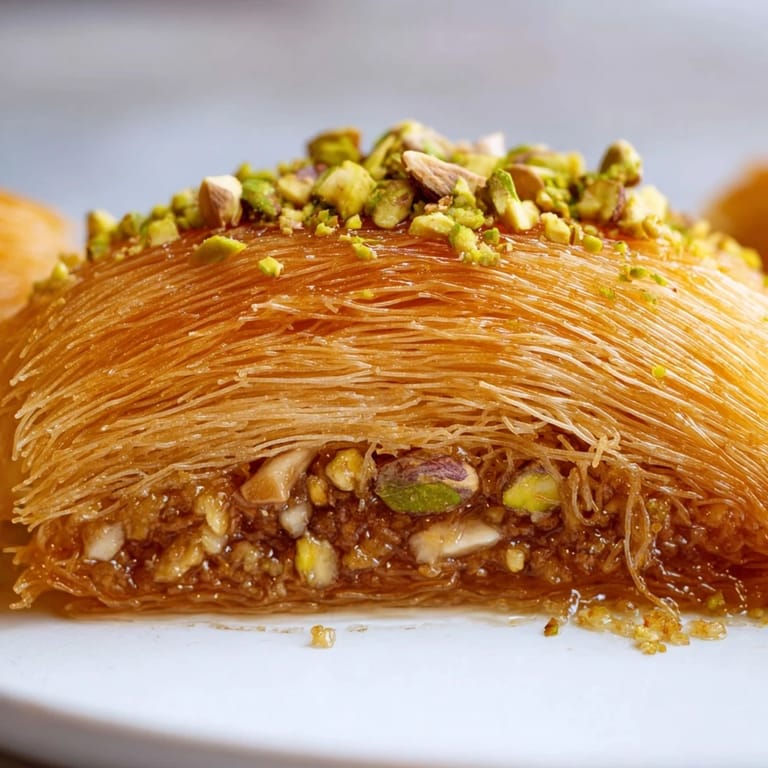
Layering is where konafa stops being a recipe and becomes an experience. Each layer needs your attention—the kataifi needs its butter brushed in, the nuts need to be spread evenly, and then you repeat. It's meditative, almost like the layering prepares your mind for the sweetness to come. I've made this dozens of times, and I still find myself pausing between layers just to admire the building structure, knowing that something beautiful is happening inside this pan.
Why the Spices Matter
Cinnamon and cardamom might seem like small players in a dessert this rich, but they're the difference between good and unforgettable. They whisper under the honey and nuts, creating depth that lingers long after you've finished eating. The spices also cut through the sweetness so your palate doesn't get tired, which is why people always come back for seconds.
Variations and Personal Touches
Once you've made this konafa once, you'll start thinking about what you'd change next time. Maybe you'll try hazelnuts or cashews instead of walnuts, or you'll add a whisper of orange zest to the nut filling. Some people swear by layering in sweetened clotted cream for extra richness, while others keep it simple. The beauty of this dessert is that it's flexible enough to welcome your creativity without falling apart.
- Try substituting nuts with hazelnuts, cashews, or pecans depending on what calls to you.
- Add a thin layer of sweetened ricotta or clotted cream between the kataifi layers for unexpected richness.
- Serve with fresh berries or a generous dollop of whipped cream if you want to make it even more special.
 Pin it
 Konafa is one of those desserts that rewards care and attention, and every time you make it, you're honoring a tradition that's been passed down through countless kitchens. Serve it warm or at room temperature, watch people's faces light up, and know that you've created something truly special.
Frequently Asked Questions
- → What type of phyllo dough is used in this dish?
Shredded phyllo dough, known as kataifi, is used to create crisp, delicate layers in the pastry.
- → Which nuts are featured in the filling?
The nut filling includes finely chopped walnuts, pistachios, and almonds spiced with cinnamon and cardamom.
- → How is the honey syrup prepared?
The syrup is made by boiling sugar and water, then stirred with honey, lemon juice, and optionally rose or orange blossom water for floral notes.
- → What oven temperature and baking time are recommended?
Bake at 180°C (350°F) for 30–35 minutes until the layers turn golden and crisp.
- → Can the nut variety be substituted?
Yes, nuts like hazelnuts, cashews, or pecans can be used to customize the texture and flavor.
- → How to serve for best texture and flavor?
Allow the pastry to cool and soak in the syrup for 30 minutes before slicing, then serve at room temperature.