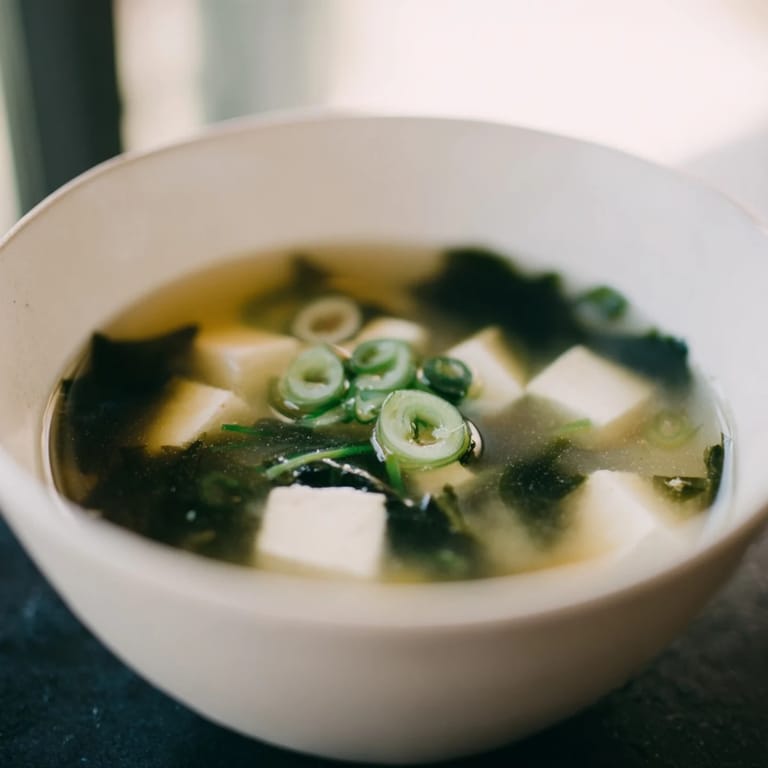
 Save
Save The steam rising from a bowl of miso soup still pulls me back to a tiny Tokyo ramen shop where I sat at 2 AM, jetlagged and disoriented, watching the owner prepare soup with this meditative rhythm I couldn't look away from. He told me wakame seaweed was the ocean's gift to tired souls, and something about that phrase stuck with me through all these years of recreating that moment in my own kitchen.
I started making this during college finals when I needed something nourishing but couldn't afford to spend hours at the stove. My roommate would hover around the pot, asking if it was done yet, until we both just started eating it straight from the saucepan with those oversized wooden spoons we got from the dollar store. Now it's my go-to when someone says they're feeling under the weather or just kind of hollow inside.
Ingredients
- Dried wakame seaweed: A tiny handful expands dramatically in water, so don't be alarmed by how little you start with
- Dashi stock: The foundational soul of Japanese cooking, though I've used vegetable broth in a pinch and it still works beautifully
- Silken or firm tofu: Silken feels more luxurious in the mouth but firm holds up better if you plan to make this ahead
- Scallions: Fresh green onion on top adds this sharp brightness that cuts through the rich miso
- White miso paste: Milder and sweeter than red miso, perfect for a gentle soup that doesn't overwhelm
- Soy sauce: Just enough to deepen that savory foundation without making it too salty
- Sesame oil: Totally optional but adds this nutty finish that makes people ask what your secret ingredient is
Tired of Takeout? 🥡
Get 10 meals you can make faster than delivery arrives. Seriously.
One email. No spam. Unsubscribe anytime.
Instructions
- Wake up the wakame:
- Place those shriveled seaweed pieces in a small bowl with cold water and watch them bloom into these beautiful dark green strands while you prep everything else
- Gently warm the dashi:
- Bring your broth to a bare simmer over medium heat, watching for those tiny bubbles that tell you it's ready but not boiling
- Add the tofu and wakame:
- Carefully slide in those tender tofu cubes and the rehydrated seaweed, letting them swim together for just a couple minutes until everything is heated through
- Dissolve the miso:
- Ladle out some hot broth into a small bowl and whisk the miso paste until it's completely smooth, then pour this back into the soup
- Finish with seasonings:
- Stir in the soy sauce and sesame oil, letting everything meld for one final minute while resisting the urge to boil the life out of it
- Garnish and serve:
- Those sliced scallions on top aren't just decoration, they add this fresh pop that makes the whole bowl come alive
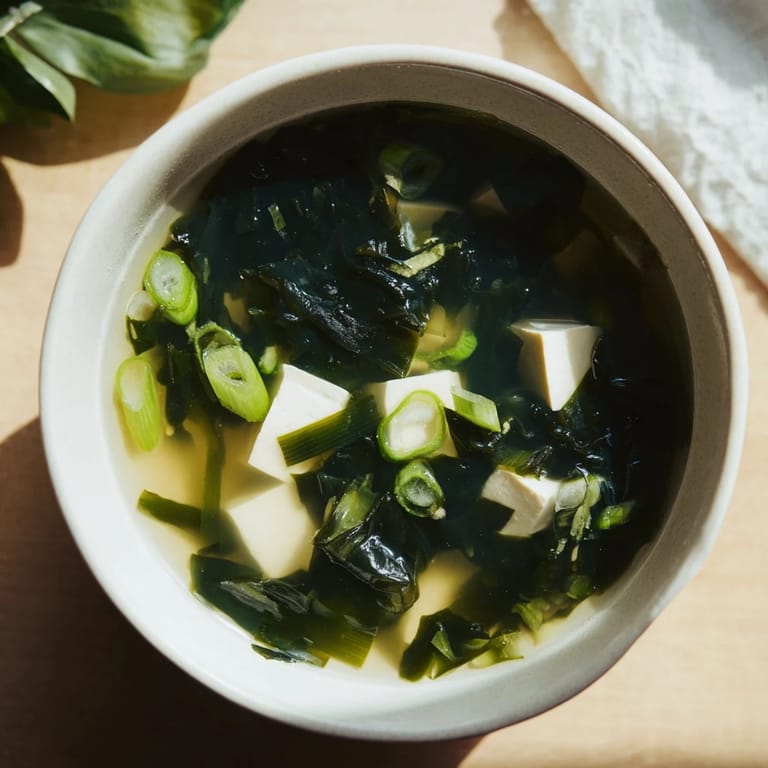 Pin it
 My mother in law tried this once and immediately asked for the recipe, which is how I knew it was a keeper since she's usually suspicious of anything that comes from the ocean. Now she makes it twice a week and claims it's her secret weapon against winter colds, though I suspect she just loves how minimal the cleanup is.
Making It Your Own
The beauty of this soup is how forgiving it is as a base. I've added shiitake mushrooms when I needed something more substantial, thrown in spinach during those months when I'm trying desperately to eat more greens, and even stirred in a beaten egg during the last minute for a comforting, ribbly texture that reminds me of egg drop soup from childhood.
Broth Variations
While traditional dashi is made from bonito flakes, I've discovered that kombu and shiitake mushroom broth creates this deeply earthy version that my vegan friends actually prefer. Sometimes I'll use a good quality vegetable broth from the store, adding a piece of kombu while it simmers to infuse that ocean essence.
Serving Suggestions
This soup wants to be part of something bigger, like a supporting character that somehow steals the show. I'll serve it alongside steamed rice and pickled vegetables for a light dinner, or as the first course before a more substantial main. The key is having something ready to soak up that precious broth.
- Keep extra miso paste in the refrigerator, it only gets better with age
- Don't refrigerate leftover soup, the texture completely changes and the tofu becomes spongy
- A sprinkle of sesame seeds on top makes this feel restaurant worthy without any extra effort
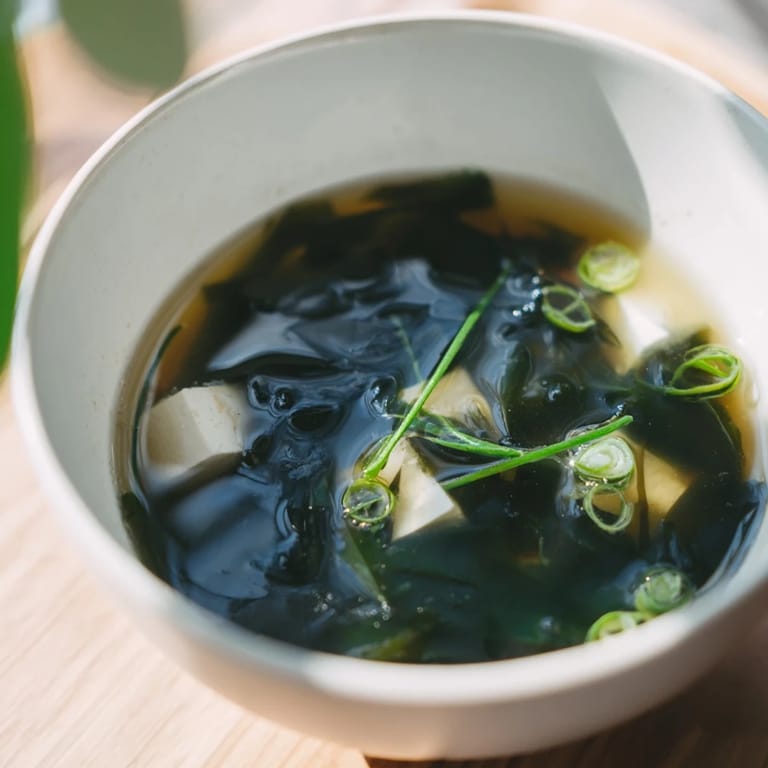 Pin it
 There's something profoundly grounding about making this soup, like you're participating in a tradition that spans generations while also taking care of yourself in the most basic, nourishing way possible.
Frequently Asked Questions
- → What is wakame?
Wakame is a nutritious edible seaweed commonly used in Japanese cuisine. It's rich in iodine, calcium, and minerals. When dried, it rehydrates quickly and develops a tender, slightly slippery texture perfect for soups and salads.
- → Can I make this vegan?
Yes, simply use kombu and shiitake mushroom dashi instead of fish-based dashi stock. Most miso paste is naturally vegan, but always check the label to ensure no fish-derived ingredients are included.
- → Why shouldn't I boil the miso?
Boiling miso paste can destroy its beneficial probiotics and alter the delicate flavor. The proper technique is to blend miso with a small amount of hot broth first, then stir it into the soup after removing the pot from direct heat.
- → How long does dried wakame last?
Properly stored in an airtight container in a cool, dry place, dried wakame can last up to a year or more. Keep it away from moisture and direct sunlight to maintain quality.
- → What can I add to enhance the flavor?
Fresh ginger, sliced mushrooms, spinach, or carrots make excellent additions. A splash of rice vinegar or a sprinkle of red pepper flakes can add depth and subtle heat if desired.